
Welcome to the Indiana Business Tax Guide, your comprehensive resource for navigating the intricacies of business taxation in the Hoosier State. Whether you’re a seasoned entrepreneur, a small business owner, or just starting on your business journey, understanding the tax landscape is crucial for financial success. This guide aims to demystify Indiana’s business tax system, providing clear explanations, insights, and practical advice to help you make informed decisions. From corporate income taxes to sales and use taxes, we’ll explore the various tax obligations, exemptions, and incentives that impact businesses operating within Indiana’s borders. Join us on this informative journey to gain the knowledge and tools necessary to navigate Indiana’s business tax terrain effectively.
What is the Corporate Income Tax Rate in Indiana?
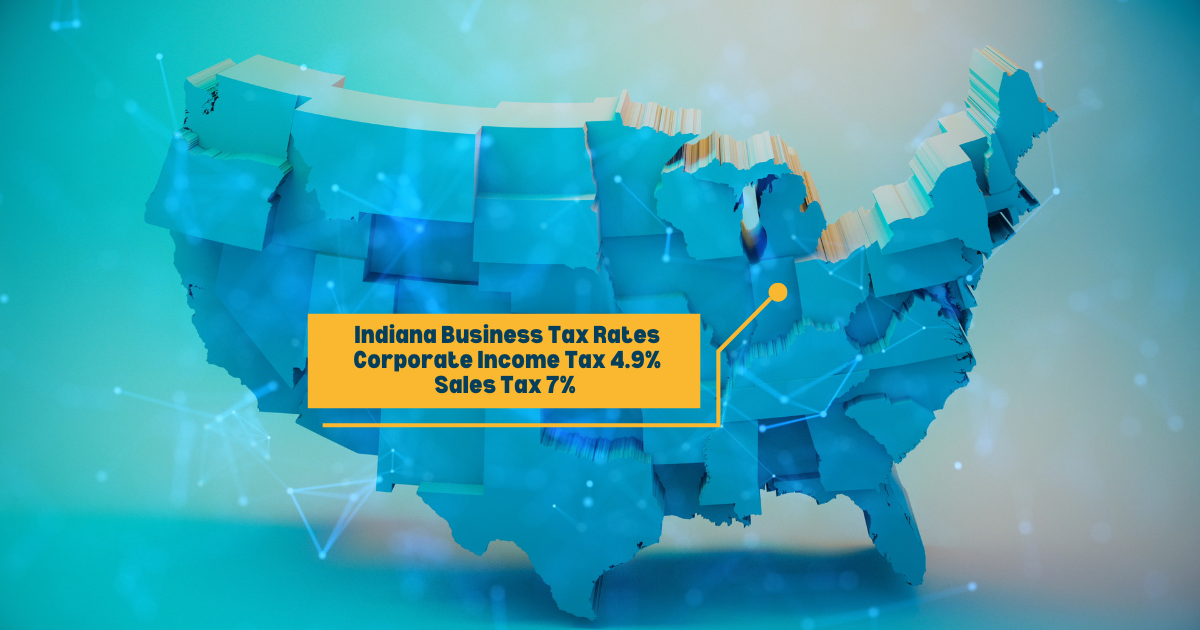
The corporate tax rate has been steadily decreasing in Indiana over recent years to a flat 4.9% where it has stood since July 1, 2021.
When is the Indiana Corporate Income Tax Return Due?
The corporate tax due date for individual returns in Indiana aligns with the federal deadline of April 15 for calendar year filers.
Extensions are available for individuals who cannot file by the original due date. Indiana mandates that taxpayers file an extension, providing an additional 30 days beyond the federal extension deadline. If a taxpayer anticipates a refund or does not expect to owe additional taxes, Indiana accepts the federal extension or allows the filing of Form IT-9, the Application for Extension of Time.
In cases where additional tax is owed, Form IT-9 must be filed along with the payment. This form cannot be e-filed and must be mailed to the specified address, though an online completion option is available, allowing payments to be made on the Indiana DOR website. The late payment penalty is waived if at least 90% of the tax due is paid by the original due date, with the remaining balance, plus interest, paid in full by the extended due date. It’s important to indicate on the tax return that it is being filed on extension when submitting the documents.
How is Indiana State Income Tax Nexus Triggered?
Indiana’s income tax nexus standard is rooted in a taxpayer’s “economic presence” within the state, distinctly diverging from a reliance on the physical or factor presence of a nonresident taxpayer as can be seen in 45 IAC 3.1-1-38.
The imposition of Indiana’s corporate income tax is based on adjusted gross income derived from sources within the state. Specifically, income from conducting business activities in Indiana is explicitly included in the “adjusted gross income derived from sources within Indiana.”
Engaging in activities such as maintaining an office or business location, holding an inventory of merchandise, selling or distributing goods to in-state customers directly, providing services, owning or operating a business or property, accepting orders, and any other act exceeding mere order solicitation establishes a taxpayer as “doing business” in Indiana.
Are There Indiana Income Tax Credits Available?
Yes, Indiana offers various corporate income tax credits to businesses. Some of the available tax credits in Indiana include:
1. Hoosier Business Investment Tax Credit: This credit is designed to encourage capital investment in Indiana by providing a credit against state tax liability based on qualified capital investment.
2. Headquarters Relocation Tax Credit: Businesses relocating their headquarters to Indiana may be eligible for this credit, which is aimed at attracting and retaining corporate headquarters in the state.
3. Venture Capital Investment Tax Credit: This credit is available to individuals and entities that invest in qualified Indiana businesses engaged in the venture capital industry.
4. Research Expense Tax Credit: Indiana provides a credit for qualified research expenses, encouraging businesses to engage in research and development activities within the state.
5. Workforce Ready Grant Tax Credit: Employers contributing to the Workforce Ready Grant program may qualify for a tax credit, promoting workforce development efforts.
6. Hoosier Alternative Fuel Vehicle Manufacturer Tax Credit: Businesses involved in manufacturing alternative fuel vehicles may be eligible for this credit, encouraging the growth of the alternative fuel industry in Indiana.
7. Industrial Recovery Tax Credit: This credit is designed to incentivize the rehabilitation of certain industrial facilities, contributing to economic development and job creation.
8. Hiring Veterans Tax Credit: Employers hiring qualified veterans may be eligible for a tax credit as a recognition of their contribution to veteran employment.
What is the Indiana Sales Tax Rate?
Indiana imposes a statewide sales tax rate of 7 percent and does not apply any local sales taxes.
How is Sales Tax Nexus Triggered?
Under Indiana law, a seller lacking a physical presence in Indiana is mandated to acquire a registered retail merchant’s certificate and collect and remit applicable sales tax if the seller satisfies either or both of the following conditions in the previous calendar year or the ongoing calendar year:
1. Gross revenue from sales into Indiana surpassing $100,000, encompassing sales not subject to sales tax or deemed tax-exempt; or
2. Engaging in 200 or more separate transactions into Indiana.
Sales into Indiana or sales transactions comprise a combination of sales involving tangible personal property delivered into Indiana, electronically transferred products into Indiana, and services delivered within the state.
What Transactions are Included or Excluded from Sales Tax?
In Indiana, sales tax is applicable to a wide range of transactions involving the sale, lease, or rental of tangible personal property (goods), digital content with a permanent right for the buyer to use, short-term rental accommodations for 30 days or less, furnishing of meals or drinks, admissions to events or places in Indiana, and the privilege to use personal property or facilities for recreation. Additionally, production, fabrication, printing, or imprinting labor are also subject to sales tax.
However, certain transactions are excluded or considered non-taxable under Indiana sales tax law. Exempt transactions include those that involve intangible personal property, such as shares of stocks, bonds, and evidences of debt. Additionally, certain goods and services are considered non-taxable, including qualifying food, drugs, medical appliances, fuel for international flights, and gold bullion issued by qualified governments.
Are Services Taxed for Sales Tax?
In Indiana, services are generally exempt from sales tax unless the service involves the creation or manufacturing of a tangible product. Some instances of taxable services in Indiana include:
1. Providing, preparing, or serving food, meals, or beverages.
2. Charging admission fees to venues or events within Indiana.
3. Offering short-term rental accommodations for a duration of 30 days or less.
Is SaaS Taxable for Sales Tax?
In Indiana, there is no sales tax imposed on Software-as-a-Service (SaaS). The exemption stems from the state’s definition of SaaS, where it is described as a service provider hosting a software application online for a customer. Specifically, when software is accessed remotely from a hosted computer or server, or through shared resources in cloud computing, without requiring the user to download the software, such transactions are not classified as retail transactions. Consequently, Indiana does not levy sales or use tax on this type of software service.
IaaS transactions in Indiana are exempt from tax if customers aren’t acquiring, renting, or leasing equipment. PaaS involves using software development tools, and if hardware is incidental or not acquired, it’s exempt. The burden is on the taxpayer to establish hardware usage, control, transaction object, and ownership rights.
For service providers, purchased software is taxable unless exempt, potentially incurring use tax when used for Indiana customers. Reselling software to customers may be tax-exempt, but the provider must charge sales tax. Specific scenarios, like remote IT services, impact taxability, with certain software deemed taxable to the provider.
Sourcing software sales follows specific rules, accounting for multiple licenses and their storage locations. Software maintenance contracts can be subject to sales tax unless exempted, hinging on bundled transactions, exemptions, or remotely accessed software. Continuous updates for remotely accessed software may not qualify as maintenance contracts.
Transactions involving specified digital products may be retail, and remote storage transactions for providing digital space are tax-exempt. Web hosting and design services are not subject to sales tax. Training services are also non-taxable, but if materials are provided beyond a de minimis amount, sales tax may apply to the material transaction. Understanding these nuances ensures compliance in Indiana’s evolving tax landscape.
Frequently Asked Questions (FAQs) – Indiana Business Tax Guide
1. Do I need to pay sales tax on my business transactions in Indiana?
Yes, Indiana imposes a sales tax on various transactions, including the sale of tangible personal property. However, specific exemptions may apply, and understanding these nuances is crucial for compliance.
2. What are the key considerations for corporate income tax in Indiana?
Indiana levies corporate income tax on adjusted gross income derived from in-state sources. Understanding the nexus standard, which involves establishing an “economic presence,” is essential for businesses to meet their tax obligations.
3. Is Software-as-a-Service (SaaS) subject to sales tax in Indiana?
No, Indiana does not require sales tax on Software-as-a-Service. SaaS, defined as hosting software applications over the internet, falls outside the scope of retail transactions, making it exempt from Indiana sales or use tax.
4. How does the state treat transactions involving computer software and digital goods?
The taxation of computer software, digital goods, and related services varies. This guide delves into the specifics of sales tax implications, licensing agreements, and considerations for remotely accessed software, providing clarity for businesses in the digital realm.
5. Are there any tax incentives available for Indiana businesses?
Yes, Indiana offers various tax incentives to promote economic development, job creation, and investment. Explore this guide to uncover potential incentives, grants, or tax credits that your business may be eligible for, helping you maximize opportunities for growth and savings.

Leave a Reply