
Minnesota’s tax landscape encompasses a variety of elements that impact individuals and businesses within the state. From income taxes to sales taxes, Minnesota has a complex framework that plays a crucial role in funding public services and initiatives. The state’s income tax system, with progressive rates based on income levels, influences how residents contribute to state revenues. In addition, the corporate tax structure and regulations affect businesses operating within Minnesota.
Understanding the nuances of tax laws, including nexus rules and exemptions, is vital for compliance and financial planning. Moreover, the state’s sales tax policies, encompassing a range of goods and services, further contribute to the intricacies of Minnesota’s tax environment. This introduction sets the stage for exploring the multifaceted aspects of Minnesota’s tax system, shedding light on its implications for both individuals and businesses navigating the complex fiscal landscape.
Minnesota’s tax framework is a critical component of the state’s fiscal policy, influencing everything from public services to economic development. With a progressive income tax structure and a corporate tax regime that underwent changes in recent years, individuals and businesses alike need to navigate various tax considerations. The interconnectedness of income, corporate, and sales taxes, coupled with specific regulations such as nexus rules and exemptions, forms the backbone of Minnesota’s tax system.
What is the Minnesota Corporate Income Tax Rate?
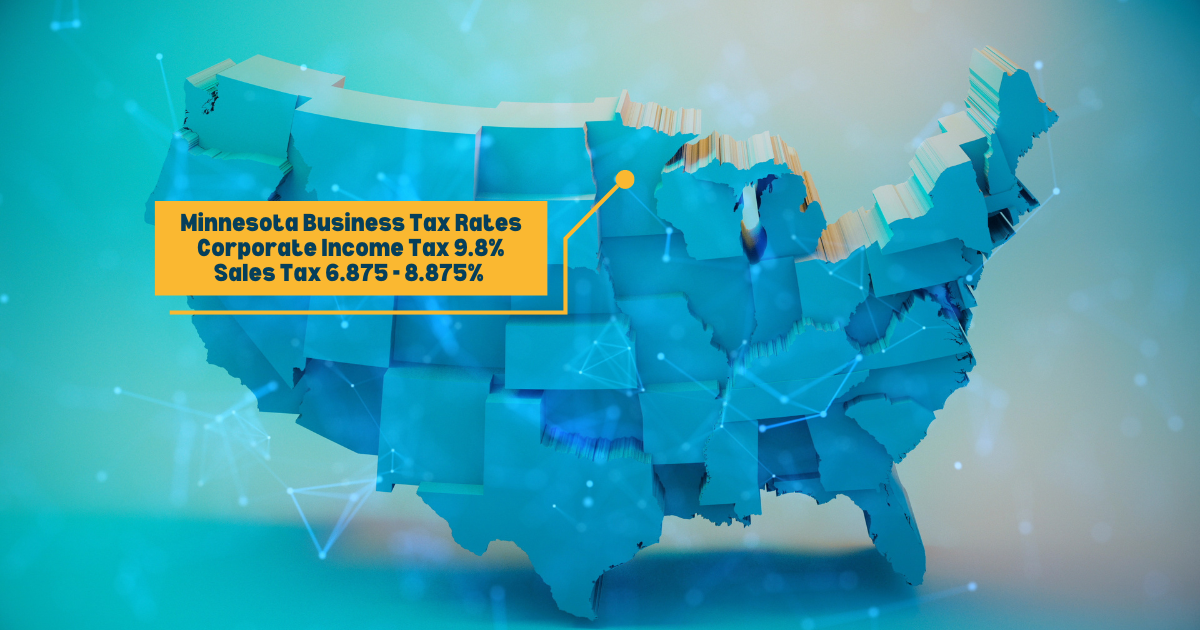
Minnesota currently holds the title for the highest corporate tax rate in the United States, standing at 9.8 percent as of January 1. This surpasses the former highest rate, previously held by New Jersey, which decreased to 9 percent at the close of 2023.
Is There a Corporate Minimum Tax in Minnesota?
Businesses in Minnesota may be subject to a minimum fee if their total Minnesota property, payroll, and sales or receipts exceed specific thresholds, which are annually adjusted for inflation.
- C Corporations, with exceptions for regulated investment companies, real estate investment trusts, and real estate mortgage investment conduits, determine their minimum fee when filing Form M4.
- Partnerships, unless more than 80% of income is from farming or they qualify under the Minnesota Job Opportunity Building Zone (JOBZ), calculate their minimum fee using Form M3.
- Single-member LLCs reporting on an individual tax return are exempt, while multi-member LLCs follow the same criteria as partnerships.
- S Corporations are exempt from the minimum fee if they participate in a JOBZ.
The minimum fee brackets are revised annually for inflation, with the 2023 brackets ranging from $0 for totals below $1,160,000 to $11,570 for amounts exceeding $46,280,000.
When is the State Corporate Income Tax Return Due?
The filing due date for Minnesota corporation tax returns is March 15th or the 15th day of the third month following the conclusion of the taxable year for fiscal year filers.
How is State Income Tax Nexus Triggered?
Minnesota State Income Tax Nexus is triggered by either physical presence or economic presence in the state.
Physical Presence:
You establish physical presence in Minnesota and become subject to tax if you, a subsidiary, or an affiliate have a location in the state or a representative performing work for you in the state. Physical presence is also considered if you own or lease property in Minnesota. Examples of locations, representatives, and property that establish physical presence include healthcare facilities, offices, distribution facilities, employees’ home offices, healthcare providers, salespersons, and various types of property.
Economic Presence:
Economic presence in Minnesota applies specifically to remote sellers, defined as businesses that sell products to customers in a state without having physical presence there. You have economic presence in Minnesota and are subject to taxes if you are a remote seller, sell, deliver, or distribute certain products into Minnesota, and do not qualify for the Small Seller Exception. The Small Seller Exception exempts remote sellers from filing a return and paying tax unless they meet specific thresholds during the calendar year.
Various thresholds and exceptions exist for different types of taxes, such as the Wholesale Drug Distributor Tax, Legend Drug Use Tax, and Provider Tax. Remote sellers need to be aware of these thresholds and comply with Minnesota tax regulations based on their specific activities and revenue levels.
Uncertain About Nexus?
If one is uncertain about having nexus in Minnesota, Form C101, the Minnesota Business Activity Questionnaire, can be completed and mailed to the state to make a determination. If you need help completing this questionnaire, Optic Tax can help with this under our Complex Consultation service offering.
Foreign Corporations are Not Exempt Under Tax Treaties
Federal 1120-F Filers may still be required to file Minnesota state taxes, even if exempted from US tax under international treaties. In order to file in Minnesota one must file a pro forma federal Form 1120 to compute Minnesota taxable income.
Specifically, the 1980 United States-Canada Income Tax Convention (Treaty) stipulates that the taxpayer’s profits are exempt from federal income taxes imposed by the Internal Revenue Code (IRC).
The Treaty explicitly states that subnational taxation is not covered by the exemptions outlined in the Treaty (Refer to Treaty Article II.2(b)). Additionally, the Treaty acknowledges that a portion of the income remains sourced within the United States.
As a result, the Treaty does not define, modify, or exempt income from the IRC definition of federal taxable income, serving as the basis for determining Minnesota net income.
Are There Minnesota Income Tax Credits Available?
Minnesota provides various corporate income tax credits to businesses operating in the state. Some notable corporate income tax credits in Minnesota include:
Research and Development Credit:
Businesses engaged in qualified research and development activities can claim a credit to encourage innovation and technological advancement.
Job Opportunity Building Zone (JOBZ) Credit:
Businesses located within designated JOBZ areas may be eligible for tax credits, exemptions, and other benefits to promote job creation and economic development.
Investment Tax Credit:
Certain businesses making qualified investments in depreciable property may qualify for a credit, stimulating capital investment in the state.
Angel Tax Credit:
Investors supporting qualifying startup companies may receive a tax credit, fostering investment in emerging businesses and technology.
Historic Structure Rehabilitation Credit:
Businesses involved in rehabilitating historic structures may be eligible for a credit, encouraging the preservation and redevelopment of historical sites.
Green Acres Program Credit:
Agricultural property enrolled in the Green Acres Program may qualify for property tax credits, promoting the preservation of open spaces and agricultural land.
What is the MinnesotaCare Tax?
Minnesota imposes taxes on health care providers, hospitals, and surgical centers offering health care goods and services within the state. Additionally, the state collects taxes on legend drugs sold, delivered, or distributed in Minnesota. These tax revenues contribute to funding the MinnesotaCare program, a state health care initiative aimed at supporting residents with low incomes.
In 2024, there will be a change in the MinnesotaCare Tax Rate, with the rate set to adjust to 1.8% for taxes related to Providers, Hospitals, Surgical Centers, Wholesale Drug Distributors, and Legend Drug Use.
Who has to file the Minnesota Care tax?
You are liable for MinnesotaCare taxes if you establish taxable presence, or nexus, in Minnesota, which can be either physical or economic presence.
Physical Presence:
You have physical presence if you, a subsidiary, or an affiliate own property, have a location, or employ representatives in Minnesota. Examples include healthcare facilities, offices, distribution and retail locations, warehouses, employee home offices, or any other place of business.
- Representatives: Representatives working in Minnesota include healthcare providers, employees, affiliates, salespersons, independent contractors, or any third parties performing tasks like providing patient services, soliciting orders, advertising, delivering products, or assisting in customer service.
- Property: Owned or leased property in Minnesota encompasses real property like land or buildings, and tangible personal property such as inventory, equipment, or vehicles.
Economic Presence:
Economic presence is relevant for remote sellers. If you are a remote seller delivering specific goods into Minnesota, you are subject to MinnesotaCare taxes. Economic presence applies if you sell, deliver, or distribute legend drugs, hearing aids and related equipment, or prescription eyewear into Minnesota and do not qualify for the Small Seller Exception.
Small Seller Exception:
The Small Seller Exception exempts remote sellers from filing returns and paying taxes unless they surpass specified thresholds during the calendar year. Note that having physical presence in Minnesota disqualifies you from being a remote seller eligible for this exception.
Thresholds for Different Taxes:
- Wholesale Drug Distributor Tax: Applies to those selling legend drugs at wholesale into Minnesota based on sales quantity or gross revenue thresholds.
- Legend Drug Use Tax: Relevant for those selling or distributing legend drugs not subject to Wholesale Drug Distributor Tax, based on sales quantity or total purchase price thresholds.
- Provider Tax: Applicable to sellers or distributors of hearing aids and related equipment or prescription eyewear to consumers in Minnesota, based on sales quantity or gross revenue thresholds.
Meeting the Threshold:
If you meet any of these thresholds during a year, you lose eligibility for the Small Seller Exception and must file returns and pay taxes. Compliance is required unless you fall below all applicable thresholds for a year and notify authorities by the March 15 filing due date or cease making sales into Minnesota.
What is the Minnesota Sales Tax Rate?
Minnesota imposes a state sales tax rate of 6.875 percent, with a maximum allowable local sales tax rate of 2.00 percent.
How is Sales Tax Nexus Triggered in Minnesota?
Minnesota mandates that remote sellers adhere to the collection of Minnesota Sales and Use Tax on their transactions within the state. The Small Seller Exception in Minnesota necessitates remote sellers to collect and remit sales tax if, over the preceding 12 months, their total sales meet either of the following criteria:
- 200 or more retail sales shipped to Minnesota
- More than $100,000 in retail sales shipped to Minnesota
It’s essential to note that a retail sale refers to a single sales transaction. For instance, even if one sale into Minnesota involves 10 items for a single customer, it counts as one retail sale.
Exclusions from the calculation of this exception include sales where the purchaser acquires items for resale. In cases where taxable sales into Minnesota are solely conducted through a marketplace, the marketplace assumes the responsibility of collecting and remitting Minnesota sales tax on behalf of the remote seller. This is unless the remote seller provides a copy of their Minnesota registration for sales and use tax to the marketplace provider and enters into an agreement confirming their commitment to collect and remit taxes on sales made through the marketplace. If these conditions are not met, there is no obligation for the remote seller to register and collect Minnesota sales tax.
What Transactions are Included or Excluded from Sales Tax?
In Minnesota, sales tax generally applies to the retail sales of tangible personal property and some services. Here’s an overview of transactions that are included or excluded from sales tax:
Included (Taxable):
- Tangible Personal Property: Most sales of tangible personal property are subject to sales tax. This includes items like electronics, furniture, clothing, and other physical goods.
- Digital Goods: Sales of digital goods, such as downloadable software, apps, and digital music, are generally taxable.
- Certain Services: Some services are subject to sales tax, including digital advertising services and certain repair and maintenance services.
Excluded (Non-Taxable):
- Food: Sales of most food products for human consumption in grocery stores are exempt from sales tax.
- Clothing: Clothing items are generally exempt from sales tax, with some exceptions for high-value items.
- Prescription Drugs: Sales of prescription drugs are exempt from sales tax.
- Medical Equipment: Sales of certain medical equipment are exempt from sales tax.
Are Services Taxed for Sales Tax?
While most services in Minnesota are not subject to sales tax, the following are taxable:
- Admissions
- Admissions to places of amusement (including recreational areas and athletic events)
- Making available amusement devices (including video games and games of chance)
- Making available health clubs, spas, tanning facilities, reducing salons, steam baths, or athletic facilities
- Granting membership to a sports or athletic facility
- Building cleaning and maintenance
- Delivery of aggregate (PDF)
- Detective, security, and alarm services (PDF)
- Laundry, dry cleaning, and alterations services (PDF)
- Lawn, garden, tree, and bush services (PDF)
- Lodging and related services
- Massages
- Motor vehicle towing, washing, waxing, rustproofing, and cleaning services
- Parking services
- Pet grooming, boarding, and care services
- Telecommunication services (PDF)
Is SaaS Taxable for Sales Tax?
SaaS is not taxable for Sales tax in Minnesota. Minnesota clarifies that the provision of a computer on a time-sharing basis, accessible only through remote facilities, is not considered the issuance of a “license to use” for sales tax purposes. Consequently, in this context, it qualifies as a non-taxable service.
Additionally, based on informal guidance from the department in 2011, Software-as-a-Service (SaaS) is exempt from sales tax under certain conditions. The exemption applies if the seller has full ownership and operation of the applications, the software is accessed via the Internet, not transferred to the customer, the customer lacks the right to download, copy, or modify the software, and the seller invoices customers on a per-use, monthly, or annual fee basis.
Frequently Asked Questions (FAQ’s) – Minnesota Business Taxes
What is the income tax rate in Minnesota?
Minnesota’s income tax is progressive, with rates ranging from 5.35% to 9.85%. The rate you pay depends on your taxable income, following a tiered system.
Are there specific corporate tax regulations in Minnesota?
Yes, Minnesota imposes a corporate income tax on businesses. Understanding the corporate tax structure, including minimum fees and exemptions, is essential for companies operating within the state.
How does sales tax work in Minnesota?
Minnesota has a state sales tax rate of 6.875%, with additional local taxes possible. It’s crucial to comprehend what transactions are subject to sales tax and any exemptions that may apply.
What triggers state income tax nexus in Minnesota?
State income tax nexus can be triggered by physical or economic presence. Knowing the criteria for both, whether you’re an individual or a business, is vital for compliance.
What is the MinnesotaCare tax, and who is liable for it?
MinnesotaCare taxes fund the state’s healthcare program. Health care providers, hospitals, surgical centers, and those involved in the distribution of healthcare goods are typically liable for these taxes.
Is Software-as-a-Service (SaaS) taxable in Minnesota?
Generally, SaaS is not taxable in Minnesota. Understanding the nuances of how specific services, including SaaS, are treated under state tax laws is crucial for businesses in the technology sector.
Can you help with state taxes?
If you have questions about Minnesota or any state taxes, book a consultation today. View our services page for more information on the various types of consultations and tax optimization services available at Optic Tax.

Leave a Reply