
Nestled in the heart of the Appalachian region, West Virginia is a state with a unique economic landscape and a distinct tax environment. As businesses navigate the scenic terrain and vibrant communities of the state, understanding West Virginia’s tax structure becomes paramount. Known for its rich history and diverse industries, the Mountain State imposes specific taxes on corporations, income, and sales, each playing a crucial role in sustaining the state’s fiscal well-being.
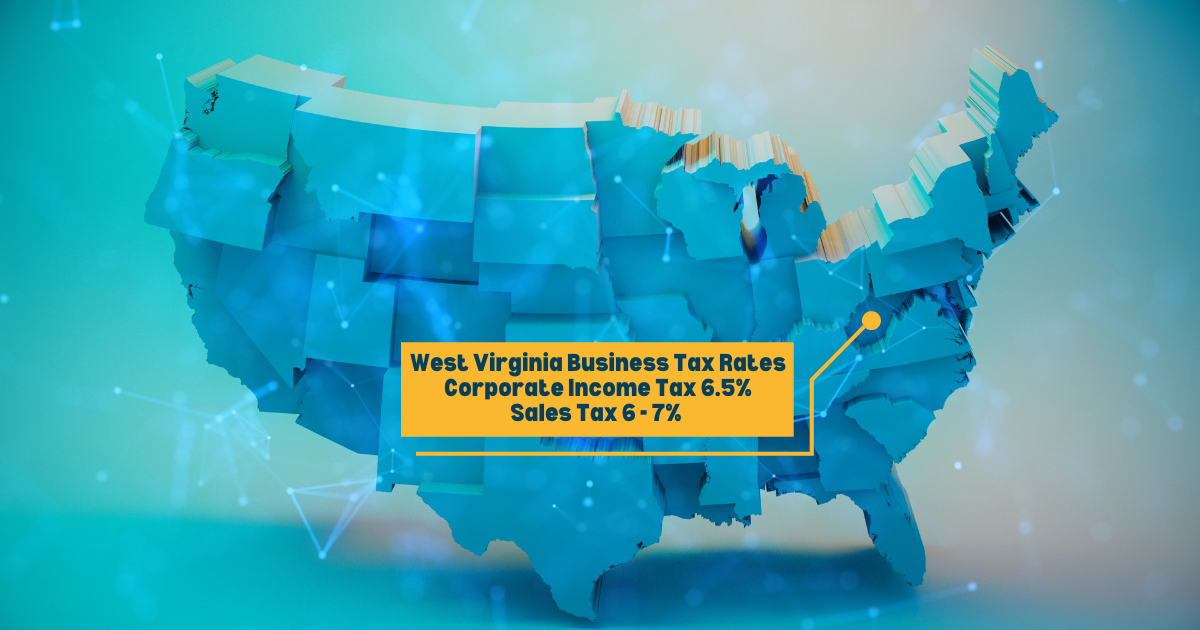
West Virginia’s tax landscape encompasses the corporation net income tax, an essential component for both domestic and foreign corporations engaging in business activities within its borders. This tax, levied at a rate of 6.5%, draws from the federal taxable income of corporations, forming the cornerstone of the state’s revenue generation. Moreover, the state’s unique approach to business registration and compliance, coupled with income tax credits and sales tax nuances, shapes the fiscal landscape for entrepreneurs and established enterprises alike.
What is the West Virginia Corporate Income Tax Rate?
All corporations, whether domestic or foreign, that are not exempt and participate in business activities or generate income from property, activities, or other sources within West Virginia are obligated to adhere to the corporation net income tax. The computation of West Virginia taxable income begins with the federal taxable income of the corporation, serving as the initial benchmark. A tax rate of 6.5% is applied to determine the corporation net income tax liability.
Is There a Corporate Minimum Tax in WV?
West Virginia has a minimum annual franchise tax due of $50.
When is the West Virginia Corporate Income Tax Return Due?
The annual franchise tax return for a West Virginia corporation must be submitted by March 15th for most corporations, or the fifteenth day of the third month following the conclusion of the taxable year. In the case of partnerships, the return deadline is the fifteenth day of the fourth month after the taxable year concludes. It is important to note that the filing of the return is mandatory, regardless of whether any tax payment is owed.
Additionally, the annual corporate tax return for West Virginia corporations is due on the 15th day of the fourth month subsequent to the conclusion of the tax year, or April 15th.
How is State Income Tax Nexus Triggered?
Before engaging in business activities in the state, businesses are required to acquire a business registration certificate from the Tax Division. Business activity is expansively characterized to encompass any deliberate revenue-generating activity pursued or instigated with the intent of acquiring gain or economic advantage, whether directly or indirectly. It encompasses all actions undertaken by this state and its political subdivisions that entail the sale of tangible personal property or the provision of services, especially when such service activities compete or may potentially compete with the endeavors of another individual or entity.
Failure to obtain a certificate while operating a business is considered a serious offense and may result in fines of $100.00 per day for each day the business operates without proper registration. An additional penalty of $50.00 per month, or any fraction thereof, may be levied for conducting business before obtaining a business registration certificate or for continuing business after the certificate has expired or been discontinued.
Does Having an Employee or Contractor Trigger Nexus?
Yes, having an employee or contractor in West Virginia can trigger nexus for a business. In West Virginia, engaging in business activities or deriving income from property, activities, or other sources within the state may subject a business to the corporation net income tax. If a business has employees or contractors performing work in West Virginia, it establishes a physical presence within the state, which can trigger nexus and make the business subject to West Virginia’s tax laws.
Are There West Virginia Income Tax Credits Available?
West Virginia offers various income tax credits to eligible individuals and businesses. Here are some examples of potential income tax credits that may be available in West Virginia:
Economic Opportunity Tax Credit:
This credit is designed to encourage investment in economically distressed areas of the state.
Manufacturing Investment Tax Credit:
Businesses engaged in manufacturing may qualify for this credit, which aims to promote investment in manufacturing facilities.
Research and Development Tax Credit:
Businesses conducting qualified research and development activities may be eligible for this credit to encourage innovation.
Historic Rehabilitation Tax Credit:
Individuals or entities rehabilitating historic structures may qualify for this credit to promote the preservation of historic properties.
Film Industry Investment Tax Credit:
This credit supports the film industry by providing incentives for qualified film productions in West Virginia.
Green Jobs Development Tax Credit:
Businesses involved in the development of green jobs and technologies may be eligible for this credit.
Child Care Facility Tax Credit:
Individuals or businesses contributing to qualified child care facilities may receive a tax credit to support child care services.
Agricultural Enhancement Tax Credit:
This credit aims to promote agricultural activities and investments in the state.
What is the West Virginia Sales Tax Rate?
The existing sales tax rate in West Virginia stands at 6%. Depending on the specific local jurisdictions or municipalities, the comprehensive tax rate may reach a maximum of 7%.
How is Sales Tax Nexus Triggered?
Any form of economic activity in West Virginia has the potential to establish nexus once your total sales surpass a specific threshold. In West Virginia, this threshold is set at $100,000 in annual sales or 200 separate sales transactions, whichever milestone your business achieves first.
What Transactions are Included or Excluded from Sales Tax?
In Virginia, the applicability of sales tax is determined by the nature of the transaction, with certain items and services being taxable while others are exempt. Here are key points regarding what transactions are included or excluded from sales tax:
Taxable Transactions:
- Sale of tangible personal property.
- Transactions involving digital goods.
- Some services are subject to sales tax.
Exempt Transactions:
- Necessities like groceries and prescription drugs are exempt.
- Services related to healthcare, education, and certain non-profit transactions may not be subject to sales tax.
Are Services Taxed for Sales Tax?
West Virginia stands out as one of the states that imposes sales tax on a wide range of services, making it distinct in its taxation approach compared to other states.
Is SaaS Taxable for Sales Tax?
In West Virginia, Software as a Service (SaaS) and software downloads are subject to taxation. If you sell cloud software subscriptions or offer software downloads to customers in West Virginia, you are obligated to pay taxes on these transactions.
However, when it comes to eBooks and digital downloads, they are exempt from taxation. Selling eBooks or providing digital downloads to customers in West Virginia does not incur tax obligations. Therefore, the taxability varies depending on the nature of the digital product, with SaaS and software downloads falling under taxable categories, while eBooks and digital downloads remain exempt from such taxation.
Frequently Asked Questions (FAQs) – Virginia Business Tax
Is there a minimum tax requirement for corporations in West Virginia?
Yes, West Virginia imposes a minimum annual franchise tax of $50 for corporations, ensuring a baseline tax obligation irrespective of the corporation’s financial performance.
When is the deadline for filing the West Virginia corporate income tax return?
The annual franchise tax return for West Virginia corporations is due by March 15th for most corporations. For partnerships, the deadline is the fifteenth day of the fourth month following the conclusion of the taxable year. Additionally, the annual corporate tax return is typically due on the 15th day of the fourth month after the end of the tax year, aligning with April 15th.
How is state income tax nexus triggered in West Virginia?
Engaging in business activities, having employees or contractors working within the state, or deriving income from West Virginia sources can trigger nexus. Obtaining a business registration certificate is crucial for compliance, and failure to do so may result in penalties.
Are there income tax credits available in West Virginia?
Yes, West Virginia offers various income tax credits to individuals and businesses. Examples include the Economic Opportunity Tax Credit, Manufacturing Investment Tax Credit, Research and Development Tax Credit, and others aimed at encouraging specific activities and investments.
What is the sales tax rate in West Virginia?
The current sales tax rate in West Virginia is 6%, with the potential for a maximum comprehensive tax rate of 7%, depending on local jurisdictions or municipalities.
Is Software as a Service (SaaS) taxable for sales tax in West Virginia?
Yes, SaaS and software downloads are taxable in West Virginia. However, eBooks and digital downloads are exempt from sales tax, showcasing a nuanced approach to taxation on digital products.

Leave a Reply