
Nebraska’s business tax landscape encompasses a diverse range of regulations and obligations that impact corporations operating within the state. From corporate income taxes to sales and use taxes, Nebraska imposes a series of financial considerations on businesses. Understanding the intricacies of Nebraska’s tax system is crucial for corporations to navigate compliance and optimize their financial strategies.
In this dynamic environment, businesses must grapple with corporate income tax rates, filing deadlines, nexus triggers, and available tax credits. Additionally, the state’s sales tax framework, including rates, nexus provisions, and exemptions, plays a pivotal role in shaping the overall tax burden on businesses. This introduction provides a glimpse into the multifaceted realm of Nebraska business taxes, offering a foundation for exploring the specifics that impact corporations in the Cornhusker State.
What is the Nebraska Corporate Income Tax Rate?
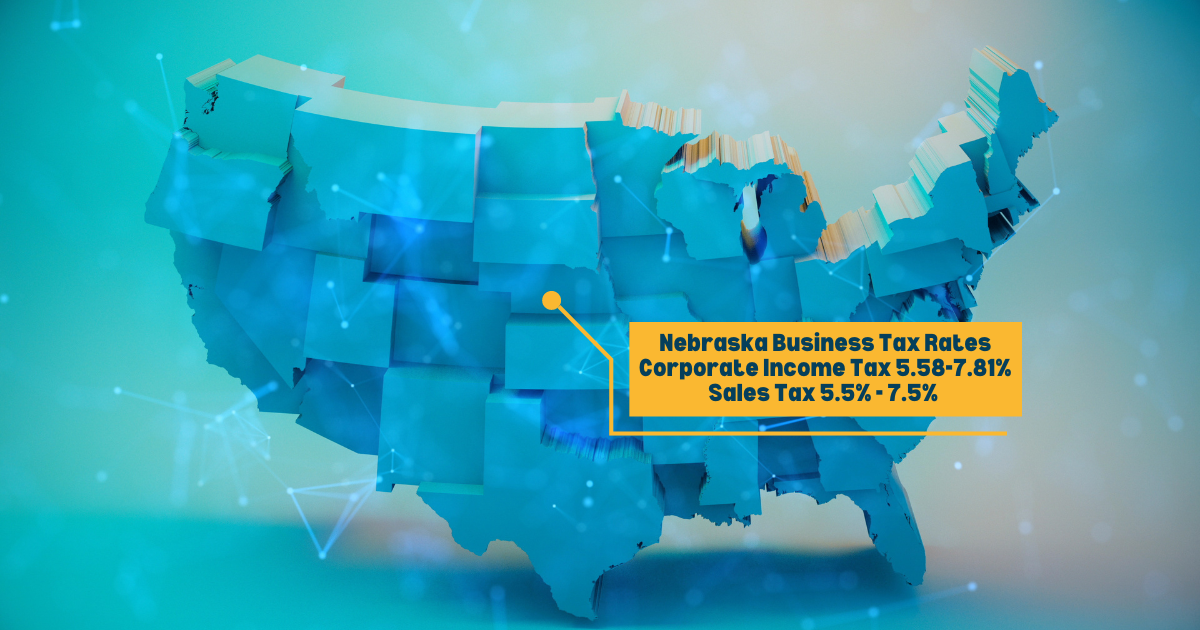
In Nebraska, corporate income tax is categorized into two rates: 5.58% and 7.81%. The elevated rate of 7.81% applies to all corporate income surpassing $50,000.
When is the State Corporate Income Tax Return Due?
Nebraska adheres to the federal due dates (Neb. Rev. Stat. § 77-2768). The general due date for the Nebraska corporation income tax return, Form 1120N, is the 15th day of the fourth month after the conclusion of the taxable year.
Corporations with a fiscal year ending on June 30 have a due date on the 15th day of the third month following the close of the taxable year. Due dates may differ for other entities, including cooperatives and exempt organizations.
How is State Income Tax Nexus Triggered?
Nebraska enforces a corporate income tax on corporations deriving a portion of their federal taxable income from Nebraska sources. The term “corporation” encompasses any entity taxed as a corporation under the Internal Revenue Code (I.R.C.).
Certain entities are exempt from Nebraska’s corporate income tax, including those protected under the salesperson exception, S corporations, and financial institutions. However, all S corporations, partnerships, and LLCs earning income from Nebraska sources are required to file a Nebraska return.
A business operating in multiple states allocates its income in Nebraska based on a sales factor. The computation of the sales factor involves dividing sales attributed to Nebraska by total sales across all locations. In cases where corporations engage in a unitary business, the determination of income and the sales factor is conducted through the combined income approach.
Are There Nebraska Income Tax Credits Available?
Nebraska offers various corporate income tax credits to eligible businesses, providing incentives for specific activities and economic development. Some common corporate income tax credits in Nebraska include:
Invest Nebraska Credit:
This credit encourages investments in businesses that create high-paying jobs and promote innovation. Investors in qualified businesses may be eligible for this credit.
Nebraska Advantage Research and Development Credit:
Designed to foster research and development activities in the state, this credit is available to businesses engaged in qualified R&D projects.
Employment and Investment Growth Act Credits:
These credits aim to stimulate employment and investment growth by providing incentives for businesses that create jobs and invest in Nebraska.
New Markets Job Growth Investment Act Credits:
Businesses investing in low-income communities may qualify for this credit, promoting economic development in underserved areas.
Nebraska Advantage Microenterprise Tax Credit:
Targeting microenterprises, this credit supports small businesses that contribute to job creation and economic growth.
Historic Preservation Credits:
Businesses involved in the rehabilitation of historic structures may be eligible for tax credits based on qualified expenses.
Ethanol and Biodiesel Production Credits:
Encouraging the production of renewable fuels, these credits support businesses engaged in ethanol and biodiesel production.
Nebraska Advantage Act Credits:
This program offers various credits to businesses that contribute to the state’s economic growth, including credits for investment, research and development, and employment.
Nebraska Affordable Housing Tax Credit:
Businesses investing in affordable housing projects may qualify for this credit, promoting the development of housing for low-income individuals.
Community Development Assistance Act Credits:
Supporting community development projects, these credits provide incentives for businesses contributing to the revitalization of distressed areas.
What is the Nebraska Sales Tax Rate?
In 2024, Nebraska’s sales and use tax rates vary between 5.5% and 7.5%, contingent on the specific location.
How is Sales Tax Nexus Triggered?
Any seller lacking a physical presence in Nebraska but generating over $100,000 in Nebraska retail sales, encompassing sales facilitated through a Multivendor Marketplace Platform (MMP), within the previous or ongoing calendar year, or conducting 200 or more Nebraska sales transactions in the same period, must register and collect Nebraska and local sales taxes on sales shipped or sourced to a Nebraska address. These established thresholds were incorporated into the legislative amendment to alleviate the impact on interstate commerce.
What Transactions are Included or Excluded from Sales Tax?
In Nebraska, various transactions are either included or excluded from sales tax. Here’s an overview:
Included Transactions (Subject to Sales Tax):
- Sale of Tangible Personal Property: Most sales of tangible personal property are subject to the Nebraska state sales tax rate.
- Sale of Services: Many services in Nebraska are subject to sales tax, including certain repairs and modifications to tangible personal property.
- Sale of Digital Products: Sales of digital goods and products are generally subject to sales tax.
- Admission Charges: Charges for admission to places of amusement, entertainment, or recreation are taxable.
- Rental of Tangible Personal Property: Renting or leasing tangible personal property is generally subject to sales tax.
- Sale of Motor Vehicles: Purchases of motor vehicles are subject to the state sales tax rate.
- Meals and Prepared Food: Sales of meals and prepared food are subject to sales tax.
Excluded Transactions (Not Subject to Sales Tax):
- Food and Prescription Drugs: Sales of food for home consumption and prescription drugs are generally exempt from sales tax.
- Agricultural Products: Sales of seeds, plants, and nursery stock for agricultural purposes are exempt.
- Residential Utilities: Charges for residential utilities, including electricity and gas, may be exempt from sales tax.
- Medical Equipment: Sales of certain medical equipment prescribed by a licensed physician are exempt.
- Newspapers and Magazines: Sales of newspapers and magazines for individual purchase are generally exempt.
Are Services Taxed for Sales Tax?
In Nebraska, services are typically not subject to sales tax, except for specific categories, which include the following taxable services:
- Admissions to a location for purposes of amusement, entertainment, or recreation.
- Pest control services.
- Building cleaning and maintenance services.
- Installation or application of tangible personal property.
- Motor vehicle towing, painting, washing, and waxing services.
- Security services.
- Computer software and training services.
- Animal specialty services.
- Detective services.
- Recreational Vehicle (RV) park services.
- Repair or maintenance services.
Is SaaS Taxable for Sales Tax?
No, Nebraska’s statutes do not explicitly tax Software-as-a-Service (SaaS) for sales tax purposes. The statutes fail to define SaaS or Cloud Computing, but they do provide a definition for computer software, which is subject to taxation. Computer software is described as a sequence of instructions directing a computer to process digital or analog data. Since Software-as-a-Service involves directing a computer not owned by the end-user to process data, it falls outside the scope of Nebraska’s definition of taxable computer software.
Businesses should be aware that fees related to software consulting and implementation are expressly taxable in Nebraska. If a significant portion of a Software-as-a-Service subscription involves consulting or implementation, the entire transaction may become subject to taxation. Additionally, careful consideration is needed for web-based software solutions that focus on safeguarding computer systems, software, or data against unauthorized access.
Frequently Asked Questions (FAQs) – Nebraska Business Taxes
What are the corporate income tax rates in Nebraska?
Nebraska imposes two corporate income tax rates: 5.58% and 7.81%. The higher rate applies to corporate income exceeding $50,000.
When is the due date for Nebraska corporate income tax returns?
Corporate income tax returns in Nebraska follow federal due dates. Generally, the deadline for filing Form 1120N is the 15th day of the fourth month after the close of the taxable year. For fiscal years ending on June 30, the due date is the 15th day of the third month after the close of the taxable year.
How is state income tax nexus triggered in Nebraska?
Nebraska enforces an economic presence income tax nexus standard. Corporations engaged in business activities within the state become subject to Nebraska corporate income tax, unless specific exemptions apply.
Are there tax credits available for Nebraska businesses?
Yes, Nebraska offers various corporate income tax credits to eligible businesses. Examples include the Invest Nebraska Credit, Nebraska Advantage Research and Development Credit, and credits for employment and investment growth.
What is the sales tax rate in Nebraska, and how is sales tax nexus triggered?
Nebraska’s sales and use tax rates range from 5.5% to 7.5%, depending on location. Sales tax nexus is triggered for sellers without physical presence in Nebraska if they exceed $100,000 in Nebraska retail sales or conduct 200 or more Nebraska sales transactions within a calendar year.

Leave a Reply