
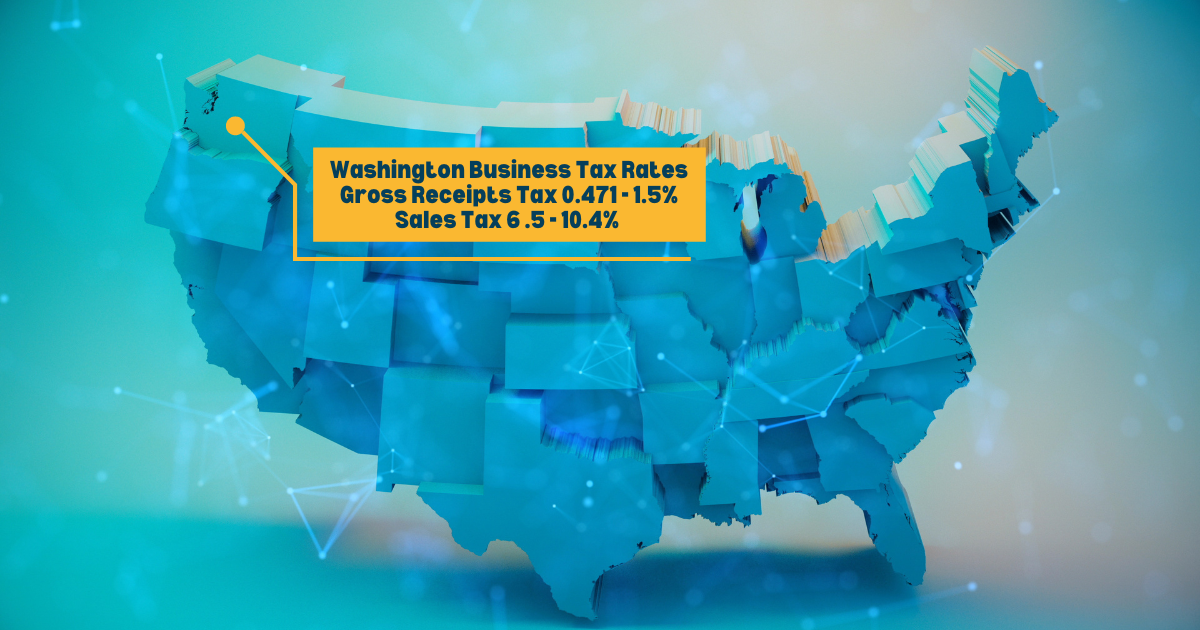
Notably, Washington does not impose a personal or corporate income tax, making it an attractive destination for individuals and businesses seeking to minimize income-related tax obligations. This key feature distinguishes the state’s tax system, fostering an environment where residents and companies can retain a larger portion of their earnings compared to states with income tax requirements.
Instead of income taxes, Washington relies on alternative revenue sources, primarily the business and occupation (B&O) tax and the sales tax. The B&O tax, a gross receipts tax, applies to businesses operating within the state, measuring their tax liability based on the value of products, gross proceeds of sale, or gross income. This tax model differs significantly from income-based approaches, as it does not allow deductions for labor, materials, or other operational costs. Additionally, Washington’s sales tax is a notable factor, impacting various transactions and consumer purchases.
What is the Washington Corporate Income Tax Rate?
In Washington state, there is no personal or corporate income tax imposed. However, individuals or businesses involved in commercial activities within the state are liable to pay business and occupation (B&O) and/or public utility tax. The applicable tax amount is determined based on the business’s gross receipts. Additionally, businesses engaged in retail sales or providing retail services may have the responsibility to collect and remit retail sales tax.
What is the Washington Business and Occupation Tax?
The B&O tax in the state is a gross receipts tax, computed based on the value of products, gross proceeds of sale, or gross income generated by the business. In contrast to several other states, Washington does not implement an income tax. The calculation of Washington’s B&O tax is centered on the gross income derived from business activities, and as such, it does not permit deductions for labor, materials, taxes, or other operational expenses.
Retailing B&O Tax Rate
This tax category applies when there are sales (or rental) of goods and certain services to customers. Income from such sales should be reported under this classification, with the Retailing B&O tax rate set at 0.471 percent of gross receipts. Additionally, retail sales tax must be collected on all sales falling under the retailing classification of the B&O tax unless specific retail sales tax deductions or exemptions apply. For a more detailed list of applicable activities and tangible items, refer to the Retail Sales Tax section.
Wholesaling B&O Tax Rate
This classification is relevant for businesses engaged in selling goods and certain services to individuals who will resell them. Income from such sales is to be reported under the Wholesaling B&O tax category, with a tax rate of 0.484 percent of gross receipts. Businesses involved in wholesale transactions must obtain a reseller permit from buyers when selling items at wholesale.
Example: A private mailbox business can sell a portion of its supply at wholesale if the business owner provides a reseller permit.
Manufacturing B&O Tax Rate
This tax category is applicable to businesses involved in manufacturing products in Washington, whether for internal use or for sale as tangible property. The tax amount is based on the value of the manufactured products or by-products, with the Manufacturing B&O tax rate set at 0.484 percent of gross receipts. Businesses manufacturing and selling products in Washington are subject to both the Manufacturing B&O Tax and the Wholesaling or Retailing B&O Tax. However, businesses may be eligible for the Multiple Activities Tax Credit (MATC), also known as Schedule C, which allows a credit against the Manufacturing B&O tax equivalent to the Wholesaling or Retailing B&O tax due on selling activities.
Example: A business involved in special order copy production reports income from sales of copies under the Manufacturing B&O tax classification, as well as Retailing and/or Wholesaling tax classifications. A MATC is applied to eliminate duplicate B&O tax payments on goods manufactured and sold in Washington.
Service and Other Activities B&O Tax Rate
This category applies when a business provides professional or personal services, including acting as an agent for third parties. Income, including commissions, from such activities is reported under the Service and Other Activities B&O tax classification. The rate for this tax is 1.5 percent, and sales tax does not apply to this income. Amounts received from specific service activities, such as postage stamps, notary fees, money order fees, mailbox rentals, internet access, computer usage, late fees, and custom or commercial packaging, fall under this classification.
Custom or commercial packaging services are taxed based on the performed activity for the customer, and the income received is reported under the Service and Other Activities B&O tax. The cost of shipping supplies or materials must be separated from the labor cost for packaging services.
Shipping services provided by a private mailing business, arranging to ship a customer’s goods through a commercial carrier, fall under the Service and Other Activities B&O tax. The compensation received for this service, such as fees or commissions, is reported accordingly.
When is the B&O Tax Return Due?
Washington B&O filing frequencies are determined based on your annual business income estimates.
Due Dates:
- Monthly returns must be submitted by the 25th of each month (e.g., The June tax return is due on July 25).
- Quarterly returns are due at the end of the month following the tax quarter (e.g., The Quarter 1 (Jan, Feb, Mar) tax return is due on April 30).
- Annual returns are required by April 15 (e.g., The Annual 2019 tax return is due on April 15, 2020).
In cases where the due date coincides with a weekend or legal holiday, the deadline is extended to the next business day.
How is State Income Tax Nexus Triggered?
A business is required to register for reporting B&O tax and collecting/submitting applicable sales tax if it meets any of the following thresholds in the current or prior year:
- Has a physical presence nexus in Washington.
- Records more than $100,000 in combined gross receipts sourced or attributed to Washington.
- Is organized or commercially domiciled in Washington.
Washington’s physical presence serves as a nexus standard, requiring more than the slightest presence. Activities that establish physical presence nexus include, but are not limited to:
- Employing individuals within the state.
- Owning real or tangible personal property in Washington.
- Holding a stock of goods in the state, including inventory managed by a marketplace facilitator or other third-party representative.
- Renting or leasing tangible personal property in Washington.
- Having an agent or third-party representative involved in activities significantly linked to establishing or maintaining a market in the state.
- Conducting sales solicitation in Washington through employees or representatives.
- Installing or assembling goods in Washington, whether by employees or representatives.
- Constructing, installing, repairing, or maintaining real or tangible personal property in Washington, whether by employees or representatives.
- Offering services in Washington, such as processing returns or providing product training, whether by employees or representatives.
- Delivering goods into Washington, excluding delivery by mail or common carrier, including the use of the seller’s own vehicles.
- Participating in a trade show to sustain or establish a market in the state, with exceptions outlined in the Special Notice titled “Trade Convention Exception from Nexus for Retail Sales.”
Does Having an Employee or Contractor Trigger Nexus?
Yes, both employees and independent contractors will trigger nexus in Washington.
Are There B&O Tax Credits Available?
Washington State offers various business and occupation (B&O) tax credits to eligible businesses. Some of the B&O tax credits that were available include:
Multiple Activities Tax Credit (MATC):
This credit is available to businesses engaging in both manufacturing and selling activities. It allows a credit against the manufacturing B&O tax for the amount of retailing or wholesaling B&O tax paid on goods manufactured and sold in Washington.
High Technology B&O Credit:
This credit is for businesses engaged in qualified research and development activities in the high-technology sector.
Aerospace B&O Credit:
Aimed at businesses engaged in qualified aerospace activities.
Clean Alternative Fuel Vehicle B&O Credit:
Available to businesses involved in manufacturing or assembling clean alternative fuel vehicles.
Biotechnology and Medical Device B&O Credit:
For businesses engaged in qualified research and development activities related to biotechnology and medical devices.
Electronic Financial Services Equipment Credit:
Businesses involved in manufacturing electronic financial services equipment may qualify for this credit.
What is the Washington Sales Tax Rate?
The current sales tax rate in Washington is 6.5%, and the total tax rate can reach as high as 10.4% depending on local municipalities.
How is Sales Tax Nexus Triggered?
The nexus threshold for sales tax in Washington is the same as for B&O tax.
What Transactions are Included or Excluded from Sales Tax?
Are Services Taxed for Sales Tax?
Services provided to individuals and businesses, such as haircuts, medical bills, and consultant fees, are generally not considered “personal property,” and most services are exempt from sales tax. However, specific service categories are subject to sales tax when offered to consumers. The following is a list of service categories that incur sales tax:
- Construction services:
- Constructing and improving new or existing buildings and structures.
- Installing, repairing, cleaning, improving, constructing, and decorating real or personal property for others.
- Cleaning, fumigating, razing, or moving structures, including painting, papering, cleaning, and repairing furnaces, septic tanks, and snow removal.
- Clearing land and moving earth.
- Installation, cleaning, and repair services
- Landscaping and landscape maintenance
- Providing tangible personal property with an operator
- Retail recreation services:
- Fishing Charters.
- Day trips for sight-seeing.
- Service charges on tickets to professional sporting events.
- Personal services:
- Personal training at athletic and fitness facilities.
- Tanning.
- Tattooing.
- Turkish and steam baths, including hot tubs.
- Dating and escort services.
- Miscellaneous services:
- Car wash (including self-service facilities) or detailing cars, trucks, campers, boats, etc.
- Catering and personal chefs.
- Extended warranties and maintenance agreements.
- Vehicle Towing.
- Automobile parking.
- Telephone services.
- Digital automated services, remote access software, and digital goods.
- Escrow services and abstract and title insurance.
- Credit bureau services, including creditworthiness and tenant screening services.
- Alarm monitoring services.
- Domain name registration services.
- Restaurants.
Is SaaS Taxable for Sales Tax?
Software as a Service (SaaS) is referred to in Washington as “remotely accessed software (RAS),” and is generally subject to taxation. Washington defines RAS as prewritten software provided remotely, wherein the buyer pays for the right to access and use the software residing on the seller’s server or a third-party server.
For B&O tax purposes, RAS is classified as a retail sale and is thereby subject to sales or use tax. However, the purchase of prewritten software qualifies for an exemption if the buyer utilizes the software to offer remotely accessed software services.
In general, when IT products and services are bundled and sold as a non-itemized package, the entire transaction becomes subject to retail sales or use tax. For instance, if a single non-itemized price covers the sale of prewritten computer software, customization of prewritten computer software, and installation services, the comprehensive charge is subject to retail sales tax or use tax.
However, when the products and services are distinctly listed on a sales invoice or contract, charges for computer hardware and prewritten computer software fall under the purview of retail sales or use tax. In contrast, separately stated charges for custom software and the customization of prewritten software are exempt from retail sales or use tax.
In summary, the acquisition of any prewritten software such as SaaS accessed remotely by consumers is subject to sales tax in the state of Washington.
Frequently Asked Questions (FAQs) – Washington Business Taxes
What is the Business and Occupation (B&O) tax in Washington?
The B&O tax is a gross receipts tax imposed on businesses for the privilege of doing business in Washington. It is measured on the value of products, gross proceeds of sale, or gross income of the business.
How is the B&O tax rate determined for different classifications?
The B&O tax rate varies based on the classification of the business activity. For example, the Retailing B&O tax rate is 0.471%, Wholesaling B&O tax rate is 0.484%, Manufacturing B&O tax rate is 0.484%, and Service and Other Activities B&O tax rate is 1.5%.
When are B&O tax returns due in Washington?
Monthly returns are due on the 25th of every month, quarterly returns are due at the end of the month following the tax quarter, and annual returns are due on April 15. Extensions may apply if the due date falls on a weekend or legal holiday.
What are the nexus standards for Washington B&O tax?
Physical presence nexus can be established through activities such as having an employee in the state, possessing real or tangible personal property, or engaging in specific business activities within Washington. The presence threshold is more than the slightest presence.
Are there tax credits available for Washington B&O tax?
Yes, Washington offers the Multiple Activities Tax Credit (MATC) for businesses involved in both manufacturing and selling activities. The MATC allows a credit against the Manufacturing B&O tax equal to the Wholesaling or Retailing B&O tax due on the selling activity.
What services are subject to sales tax in Washington?
Certain services, such as construction, cleaning, landscaping, personal services (e.g., personal training, tattooing), and miscellaneous services (e.g., car wash, catering), are subject to sales tax. However, many professional and personal services are generally exempt.
Is Software as a Service (SaaS) taxable in Washington?
Yes, SaaS is generally taxable in Washington, referred to as “remotely accessed software (RAS).” Charges for accessing and using prewritten software remotely are considered retail sales for B&O tax purposes and are subject to sales or use tax.

Leave a Reply